


Understanding microwave wattages: A quick guide
Along with the functionality, design and type of microwave you choose for your kitchen, wattage plays an important role when searching for the ideal microwave to match your making. Wattage determines how much power your microwave will have when heating up various kinds of food. This microwave wattage guide can help you determine the wattage level that can work best for your cooking needs.


What is microwave wattage?
Most microwaves range from about 600 to over 1,200 watts. In general, the higher the wattage, the more cooking power you get for faster cooking, more powerful heating and often a wider range of settings and features to work with.
Does microwave wattage matter?
Yes, wattage dictates the cooking power of your microwave. The higher the wattage, the more power to cook your food quickly. It also gives you more versatility in the types of meals you can prepare. A lower microwave wattage can reheat dishes, while a higher wattage model may be able to cook frozen foods or have more varied features.
What is the most common microwave wattage?
Microwave recipes tend to call for 1,000 watts to achieve delicious results in preparing homemade meals. You can expect a microwave with 1,000 watts to offer versatility and convenience when making your favorite dishes.
What is considered a high wattage microwave?
Microwaves with a wattage at or above 900 watts are usually considered in the high range. They can cook quickly, thoroughly and generally come with additional microwave power levels and settings.
How do I find my microwave’s wattage?
The best way to find your microwave’s wattage is to consult your user’s manual. If you don’t have the manual, look for a serial number plate on the inside door of your microwave—the wattage is often listed there.
| MICROWAVE WATTAGE | FUNCTION1 |
|---|---|
| 600–800 Watts | Cook, reheat |
| 800–1000 Watts | Cook, reheat, defrost, crisp |
| 1000–1200 Watts | Cook, reheat, defrost, crisp, steam, air fry, grill, bake, broil, roast, convection |
1. Power levels and settings vary by microwave model and wattage
What microwave wattage do I need?
The right microwave wattage for you will depend on how you use your microwave to make meals. Understanding the following wattage levels and how they cook food can help you choose. You can also explore microwave types, features and sizes to find the perfect microwave for your kitchen.

1. 600-800 watt microwaves
Microwaves that have 600 to 800 watts are on the lower wattage end, yet can handle smaller meal prep tasks such as cooking frozen meals, warming up drinks or reheating leftovers. Keep in mind that they may take longer to heat food than a microwave with a higher wattage.
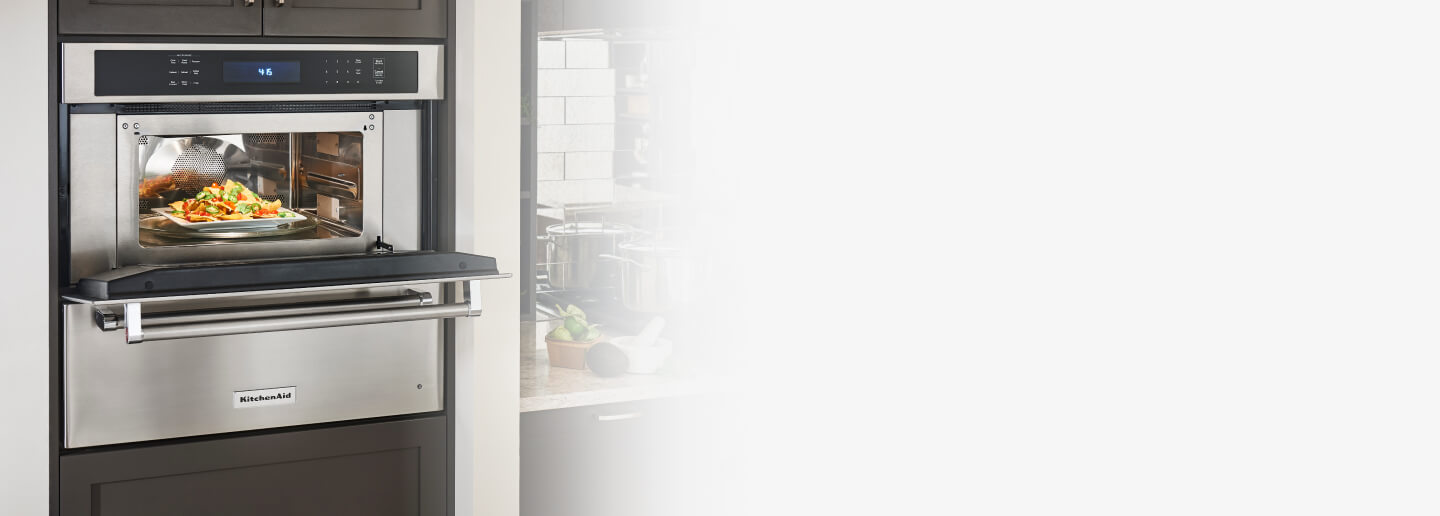
KitchenAid® built-in microwaves
Seamless integration and professional design
Whether you need to reheat, steam or fully cook a meal, KitchenAid® built-in microwaves provide a versatile cooking space without taking up your counter space

2. 800-1,000 watt microwaves
With 800 to 1,000 watts, you can expand your menu as some microwave models come with additional features that include defrosting, reheating and cooking. In fact, most microwave recipes typically require 1,000 watts for versatility and quality cooking results.

3. 1,000–1,200+ watt microwaves
On the higher wattage end, a microwave with 1,000 to 1,200 watts and above has more power to deliver larger, complex meals. With some microwave models, you can steam, air fry, grill, bake, broil and even roast foods without a stove or oven. Select KitchenAid® microwaves with a 1,200-watt convection element allow baking at temperatures up to 450°F.
Shop KitchenAid®built-in microwaves
KitchenAid® built-in microwaves deliver the power and versatility you need for quick meals, sides and prep work. Multifunction Oven Modes on select KitchenAid® models include air fry, bake, roast, broil and toast, and uses heating elements and a fan to heat up to temperatures of 450°F. The Temperature Probe on select KitchenAid® built-in microwaves takes the guesswork out of cooking Sunday roast and beef Wellington, along with other complex dishes, while the Turntable-Free Design allows corner-to-corner cooking so you can prepare multiple dishes at once for more cooking and quick cleanup.


Can you adjust your microwave’s wattage for different foods?
Most microwaves offer around five to ten power levels that let you adjust how much power your microwave uses to cook food. Higher settings use more of the microwave’s full power for quick heating—like warming soups or drinks—while lower levels, such as 20%, are ideal for gentler tasks like softening butter or ice cream.
Explore KitchenAid®microwaves
KitchenAid® microwaves offer versatility with a wide selection of wattage levels, functions, styles, sizes and colors. Select models have features like Convection Cooking and Bake Mode, which uses dual heating elements to bake at temperatures up to 450°F, eliminating the need for a countertop convection or toaster oven. Explore a variety of KitchenAid brand microwaves to find the right fit for the way you meal prep.

